
Morocco Travel: Best Guide to Africa’s Most Visited Destination
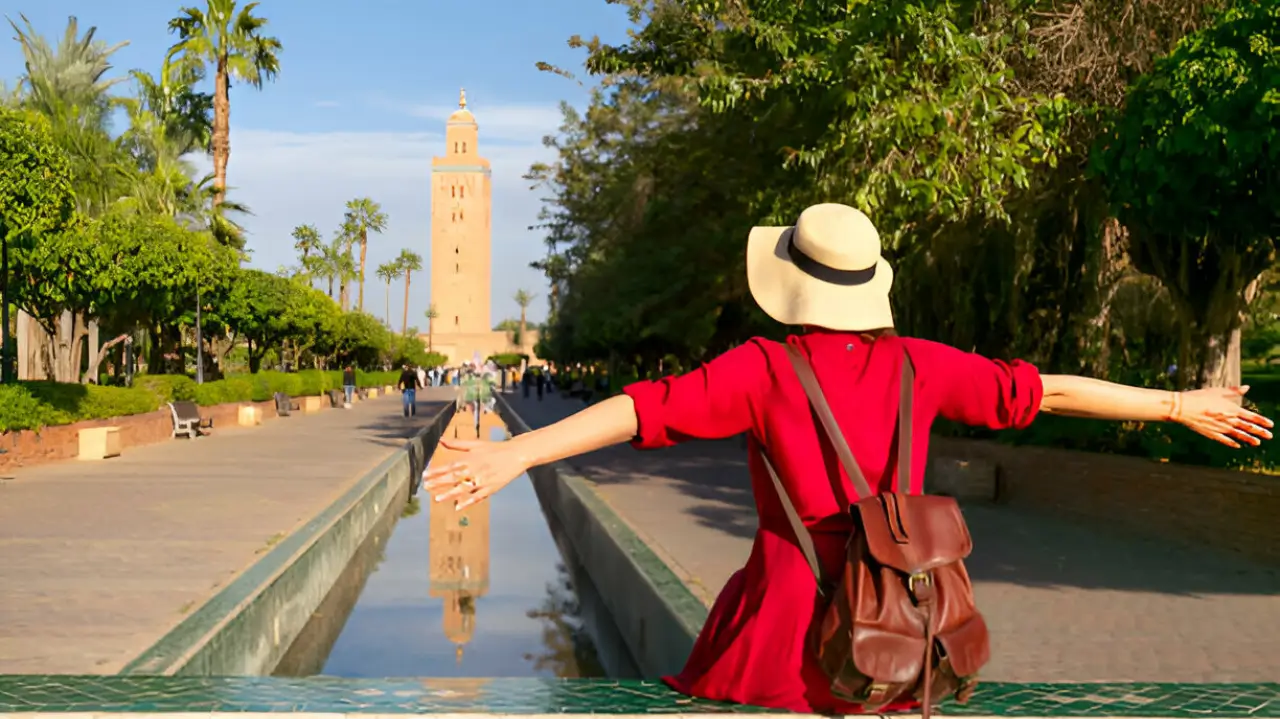
Morocco travel attracts millions of visitors each year, with 19.8 million tourists in 2025 marking a 14% increase and making it Africa’s most visited country. From Chefchaouen’s blue alleys to Sahara Desert sunsets, Morocco offers unforgettable cultural and scenic experiences across a diverse landscape.This guide covers everything you need to plan a trip: when to go, what to budget, where to stay, and how to travel safely. Whether you’re a first-timer or a repeat visitor, you’ll find practical, data-backed advice below.
Key Takeaways
- Morocco hit 19.8M arrivals in 2025, up 14% year over year (Daba Finance, 2026)
- Budget travelers can spend as little as $34/day; mid-range runs about $89/day
- Marrakech captures roughly 40% of all hotel overnights nationwide
- Morocco ranks as Africa’s safest travel destination (42nd globally)
- The country targets 26M tourists by 2030, boosted by FIFA World Cup co-hosting
Why Is Morocco So Popular With Travelers?
Morocco is Africa’s most visited destination, recording 19.8 million arrivals in 2025 and generating MAD 124 billion ($13 billion) in tourism revenue (Daba Finance, 2026). Three factors explain the momentum: proximity to Europe, affordable prices, and staggering geographic variety.
A three-hour flight from London or Paris drops you into a world that feels completely different. Medinas hum with artisan workshops. The Atlas Mountains offer trekking above 4,000 meters. The Sahara stretches south. And the Atlantic coastline runs for over 1,800 kilometers.
Tourism directly supports roughly 900,000 jobs across the country (eTurboNews, 2025). That means infrastructure, hospitality quality, and English-language services have improved rapidly. The growth isn’t slowing, either. Q1 2026 already logged 4.3 million arrivals, a 7% increase over the same quarter the prior year (ATTA, 2026).
Morocco’s tourism boom isn’t just about marketing. It’s a function of geographic luck: the country sits at the intersection of Europe, Sub-Saharan Africa, and the Arab world, making it culturally accessible to visitors from all three regions while remaining genuinely distinct from each.
Where Should You Go in Morocco?
Marrakech dominates, capturing roughly 40% of all overnight stays, followed by Agadir at 25%, Casablanca at 9%, and Tangier at 7% (eTurboNews, 2025). But concentrating your entire trip in one city would be a mistake.
Marrakech
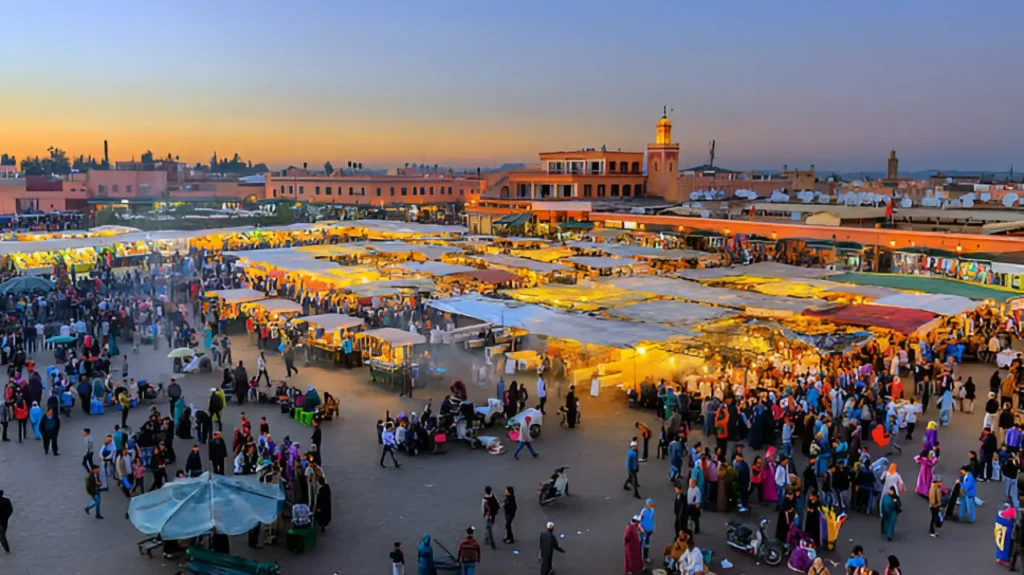
The Red City is loud, colorful, and overwhelming in the best way. Jemaa el-Fnaa square transforms hourly: orange juice vendors in the morning, storytellers and musicians at night. The medina’s souks are a labyrinth of leather, spices, and metalwork. Don’t skip the Majorelle Garden or the Bahia Palace.
Chefchaouen
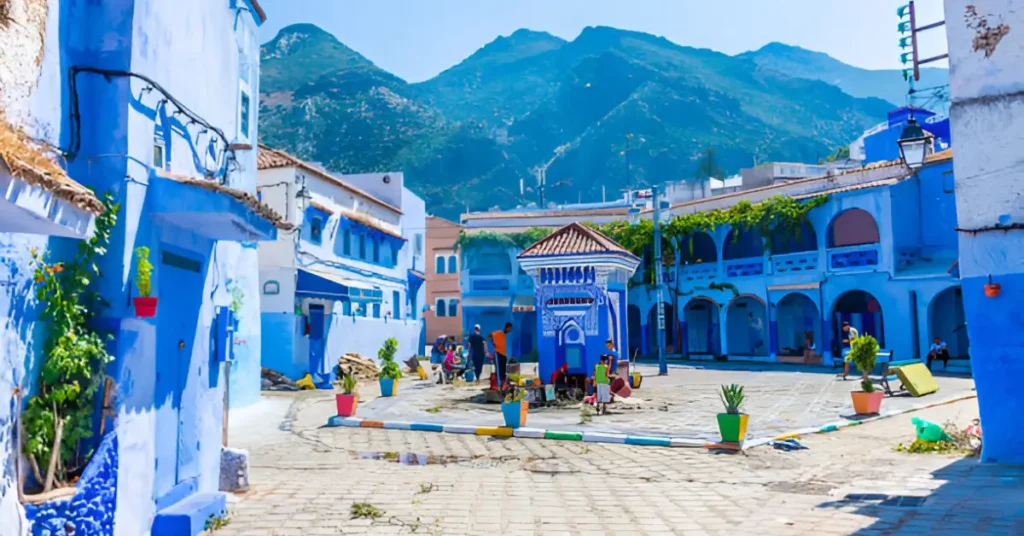
This blue-washed mountain town in the Rif feels like a different country. It’s small, walkable, and photogenic from every angle. Two days here is enough to explore thoroughly. The pace is slow. That’s the point.
Sahara Desert
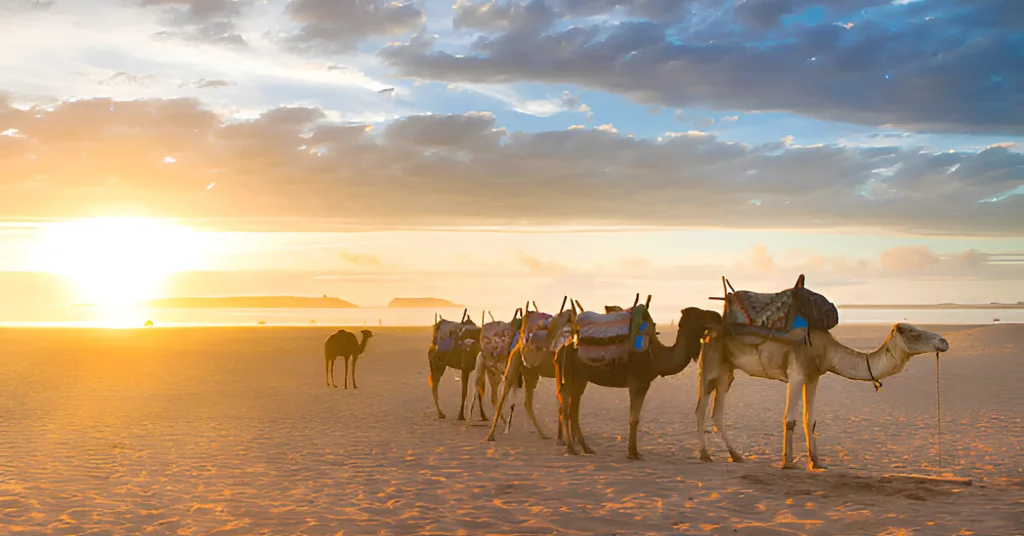
Merzouga and Zagora are the main gateways to desert camps. An overnight in the Erg Chebbi dunes, with dinner under the stars, is one of those experiences that’s genuinely hard to replicate elsewhere. Book through a local agency rather than a hotel chain for better prices and more authentic camps.
Fes, Essaouira, and Beyond
Fes has the world’s largest car-free urban area: the ancient medina. Essaouira offers Atlantic breezes and a laid-back surf culture. The Atlas Mountains provide serious trekking. And Tangier, just 14 kilometers from Spain, blends European and Moroccan energy.
Many travelers rush through Morocco in a week, hitting Marrakech, the desert, and Fes. But the country rewards slower travel. Spending three or four days in smaller towns like Moulay Idriss or Tafraoute reveals a Morocco that the major tourist circuits miss entirely.
How Much Does a Trip to Morocco Cost?
Budget travelers can get by on roughly $34 per day, mid-range visitors spend around $89, and luxury travelers average $240 daily (Budget Your Trip, 2025). Morocco remains one of the most affordable destinations accessible from Europe.
Budget Breakdown
Accommodation drives the biggest cost variance. A hostel dorm bed runs $5-10 per night. A mid-range riad costs $40-80. A luxury resort or boutique riad in Marrakech starts at $150 and climbs steeply.
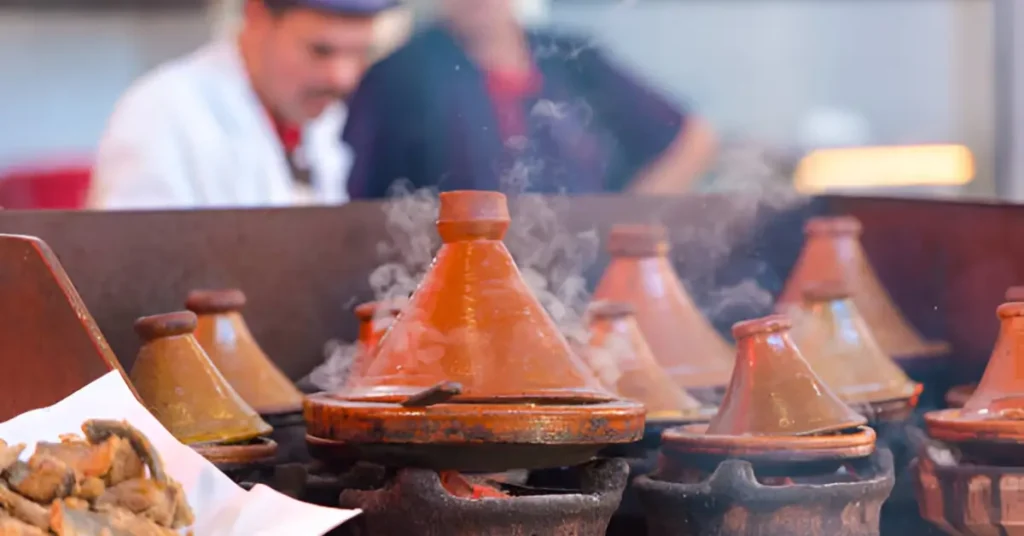
Food is remarkably cheap. Street food meals cost $1-3. A sit-down tagine with bread and tea runs $5-8. Even upscale restaurants rarely exceed $30 per person.
Transport between cities is affordable too. Buses cost $5-15 for most routes. The new high-speed train (Al Boraq) connects Tangier to Casablanca in about two hours for roughly $20. Grand taxis handle shorter intercity trips.
Where to Save, Where to Splurge
Save on food and transport. Splurge on accommodation and experiences. A night in a beautifully restored riad, with a rooftop terrace overlooking the medina, costs surprisingly little compared to European equivalents. Desert camps and guided Atlas treks are worth paying for quality.
Is Morocco Safe for Tourists?
Morocco ranks as the safest travel destination in Africa and 42nd globally, according to the HelloSafe travel safety index (Morocco World News, 2026). Violent crime against tourists is rare. Common-sense precautions handle the rest.
Petty theft happens in crowded medinas and tourist zones, just as it does in Barcelona or Rome. Keep valuables in a front pocket or money belt. Ignore persistent touts with a firm “la shukran” (no thank you). Scams targeting tourists exist but they’re well-documented and easy to avoid once you know the patterns.
Solo and Female Travelers
Solo travel is common and manageable. Female travelers report more street harassment than in Europe, particularly verbal. Modest dress reduces unwanted attention, though it won’t eliminate it entirely. Traveling with a companion helps in rural areas. Cities like Essaouira and Chefchaouen feel notably relaxed.
Health and Practical Safety
Tap water isn’t safe to drink. Stick to bottled water. Stomach issues are common in the first few days, so ease into street food gradually. Pharmacies are well-stocked and widespread. Major hospitals exist in Casablanca, Rabat, and Marrakech.
What about driving? Roads between major cities are good. Rural mountain and desert roads demand caution. Many travelers hire drivers, which is affordable and eliminates navigation stress.
Morocco’s safety ranking often surprises travelers who conflate North Africa with conflict zones further east. In practice, the tourist infrastructure is mature, police presence in major cities is visible, and the country’s economic dependence on tourism (7.3% of GDP, per Daba Finance, 2026) creates strong institutional incentives to protect visitors.
When Is the Best Time to Visit Morocco?
Morocco’s best months are March through May and September through November, when temperatures in Marrakech hover around 25-30°C. The country’s tourism momentum shows no seasonal collapse: Q1 2026 alone drew 4.3 million arrivals, a 7% increase year over year (ATTA, 2026).
Spring (March to May)
Ideal across the board. The Atlas Mountains are green. Desert temperatures are tolerable. Coastal cities are warm without being hot. This is peak season for trekking.
Summer (June to August)
Inland cities like Marrakech and Fes hit 40°C and above. The coast stays pleasant: Essaouira rarely exceeds 25°C in summer. If you visit in July or August, plan coast-first, then mountains. Skip midday in the medinas.
Fall (September to November)
Similar to spring in quality. Shoulder-season pricing kicks in by October. The Sahara cools to comfortable camping temperatures. Fewer crowds than spring.
Winter (December to February)
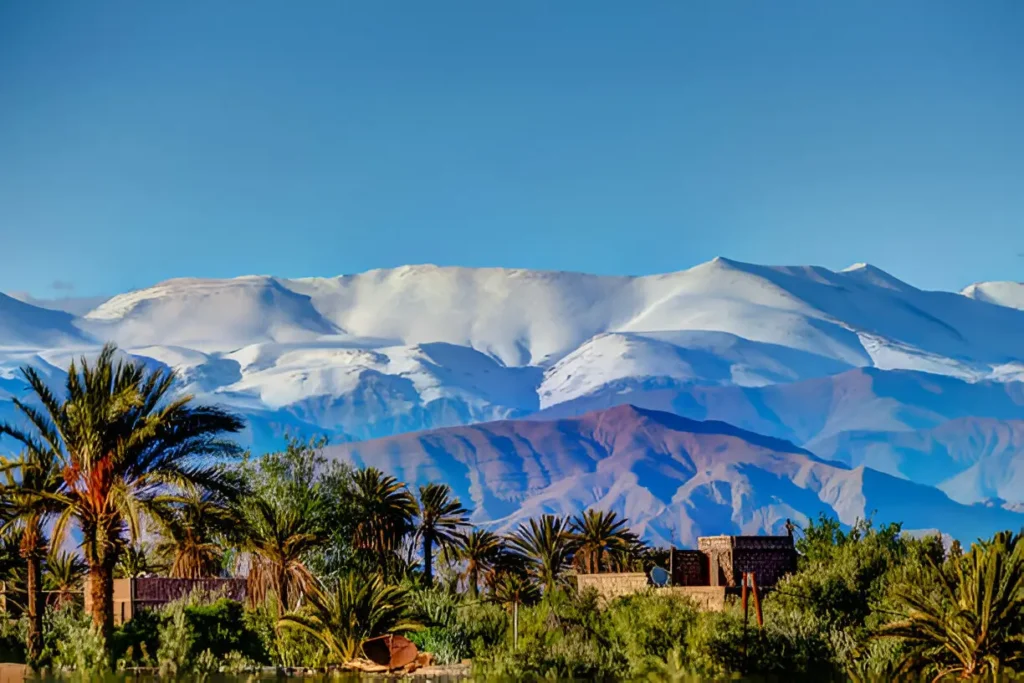
Surprisingly viable. Marrakech daytime temperatures reach 18-20°C. The Atlas sees snow, opening skiing at Oukaimeden. Rain is possible in the north. It’s the cheapest time to visit.
What’s Next for Morocco Tourism?
Morocco targets 26 million tourists by 2030, fueled partly by its role as FIFA World Cup co-host that year (ATTA, 2025). The country already surpassed its original 2026 goal a year early, signaling that the 2030 target is realistic.
Infrastructure investment is accelerating. New airport terminals, expanded high-speed rail, and hotel development across secondary cities aim to spread tourism beyond Marrakech and Agadir. The country is also investing in sustainable tourism initiatives in rural communities.
The World Cup effect can’t be understated. South Africa saw a lasting tourism boost after 2010. Morocco, already Africa’s most visited destination (Africanews, 2026), is betting the event will permanently raise its global profile.
Tourism contributes 7.3% of GDP (Daba Finance, 2026). With 900,000 jobs tied to the sector (eTurboNews, 2025), the government treats tourism growth as an economic priority, not a side project.
The pace of Morocco’s post-pandemic recovery outstripped every comparable African and Middle Eastern destination. Going from 2.78 million arrivals in 2020 to 19.8 million in 2025, a sevenfold increase in five years, represents one of the fastest tourism rebounds globally.
Frequently Asked Questions About Morocco Travel
How many tourists visit Morocco each year?
Morocco recorded 19.8 million tourist arrivals in 2025, a 14% year-over-year increase (Daba Finance, 2026). This makes it Africa’s most visited country. Q1 2026 continued the trend with 4.3 million arrivals, up 7% from the same period in 2025.
Is Morocco expensive to visit?
No. Budget travelers spend about $34 per day on average, while mid-range travelers spend $89 (Budget Your Trip, 2025). Street food costs $1-3 per meal, and intercity buses run $5-15. Accommodation in riads starts around $40-80 for mid-range options.
Is Morocco safe for solo travelers?
Yes. Morocco ranks as Africa’s safest travel destination and 42nd globally on the HelloSafe index (Morocco World News, 2026). Petty theft in tourist areas is the main concern. Violent crime against tourists remains rare across all major cities.
What is the most visited city in Morocco?
Marrakech leads with approximately 40% of all hotel overnights (eTurboNews, 2025). Agadir follows at 25%, driven largely by package beach holidays. Casablanca (9%) and Tangier (7%) round out the top four destinations.
When is the cheapest time to visit Morocco?
Winter (December to February) offers the lowest prices. Marrakech still reaches 18-20°C during the day. Tourism revenue hit MAD 124 billion in 2025 (Daba Finance, 2026), but winter remains the true off-season with significantly reduced accommodation rates.
Conclusion
Morocco’s numbers tell one story: 19.8 million arrivals, $13 billion in revenue, Africa’s top tourism destination. But the experience tells a richer one. It’s a country where you can trek mountain passes in the morning, eat the best meal of your life for $5 at lunch, and sleep under Saharan stars at night.
The practical realities are encouraging. It’s safe, affordable, and well-connected. Infrastructure keeps improving ahead of the 2030 World Cup. And the diversity of experiences, from Atlantic surf towns to ancient imperial cities, means repeat visits never feel redundant.
Start with a 10-day loop: Marrakech, Atlas Mountains, Sahara, Fes. Then come back for the coast, the Rif, and the deep south. Morocco rewards those who return.